

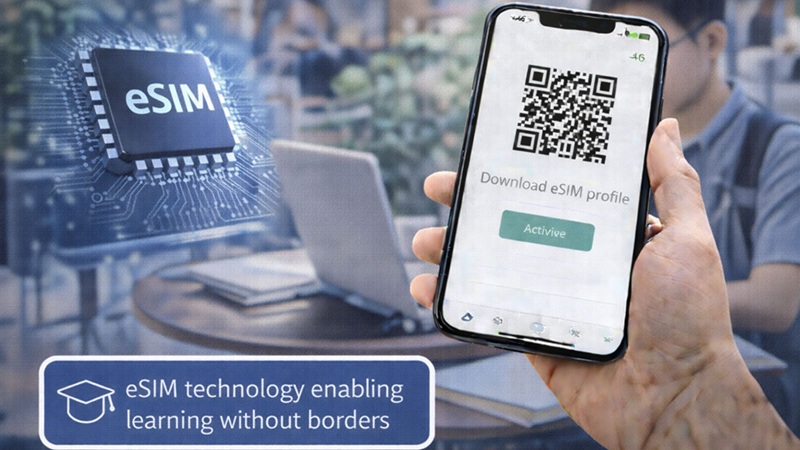
In recent years, learning has become increasingly digital, mobile, and global. Students attend online courses from different countries, researchers collaborate across borders, and educators rely on cloud-based platforms to share knowledge in real time. In this context, reliable internet access is no longer a convenience—it is a prerequisite for learning. As mobility grows, so does the need for flexible connectivity solutions that support education beyond traditional classrooms.
Learning without borders in a digital world
Online education, remote research, and digital libraries have transformed how knowledge is accessed. Learners today often move between countries for studies, conferences, field research, or short-term academic programs. Being able to access learning platforms, submit assignments, attend virtual lectures, or communicate with peers and instructors while abroad is essential to maintaining continuity.
However, staying connected while traveling internationally can present practical challenges, especially in countries with complex digital environments.
What is eSIM technology?
eSIM is short for embedded SIM. Instead of a physical form, it is a digital SIM built directly into devices like smartphones, tablets, or laptops. Unlike traditional SIM cards, it does not require physical insertion or replacement. Instead, network profiles are downloaded and activated remotely via software.
From a technical perspective, eSIM performs the same authentication role as a physical SIM, but with far greater flexibility. Users can install multiple profiles, switch plans easily, and activate connectivity without visiting a local store—features that align well with the needs of mobile learners.
Why connectivity matters for learners in China
China is a common destination for students, researchers, and educators, but it also presents a unique digital landscape. Access to cloud-based tools, international academic platforms, and collaboration software requires stable and well-planned connectivity.
For learners and professionals abroad, internet access supports:
● online courses and virtual classrooms,
● academic research and digital libraries,
● communication with institutions and peers,
● navigation and access to local services.
Without reliable connectivity, maintaining academic routines becomes significantly more difficult.
eSIM as a practical solution for international learning
eSIM technology offers a practical approach to staying connected while studying or working abroad. Because it can be activated remotely, learners can prepare their connectivity before arrival and avoid interruptions once they reach their destination. This is especially useful in environments where accessing local services may involve language barriers or administrative complexity.
In this context, solutions such as Holafly’s eSIM to travel to China illustrate how eSIM technology can support continuous digital access for learners and educators, helping them stay connected to educational resources while abroad.
Who benefits most from eSIM-enabled learning?
eSIM technology is particularly valuable for:
● students studying abroad or attending exchange programs,
● academic researchers traveling for fieldwork or conferences,
● remote learners accessing international platforms,
● educators delivering or supporting courses from different locations.
For these groups, connectivity is directly linked to productivity, participation, and academic success.
Technology as an enabler of global learning
As education continues to evolve beyond physical classrooms, connectivity becomes a foundational tool for access and inclusion. Technologies like eSIM help reduce friction, allowing learners to focus on acquiring knowledge rather than managing technical constraints.
By supporting flexible, location-independent access to digital resources, eSIM technology plays a quiet but important role in enabling learning without borders—helping students and educators stay connected wherever their academic journeys take them.