

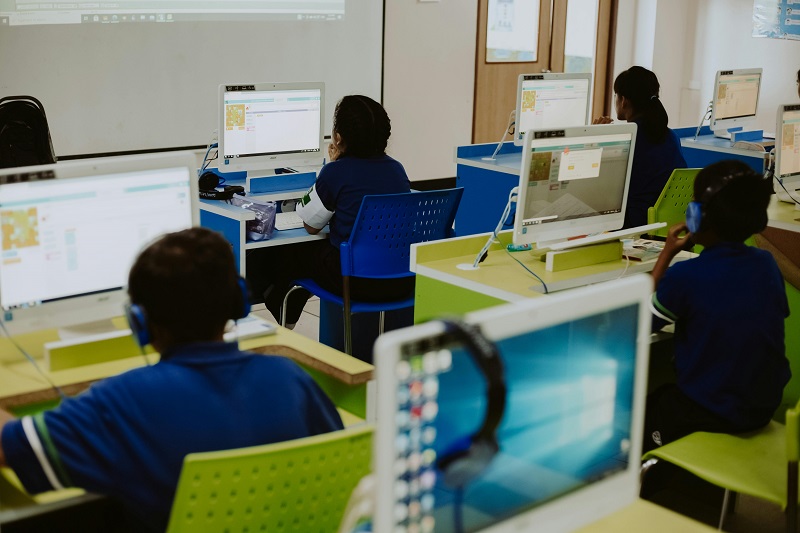
Let’s be honest. Classrooms are loud. Not concert-loud, but loud in that special, chaotic way that only thirty kids in a confined space can achieve. Somebody is always tapping a pencil. A chair scrapes across the floor at exactly the wrong moment. The heating system kicks on and decides to narrate the entire math lesson. For most students, this is just the background soundtrack of school life. For a student with hearing loss, it is something else entirely. It is an obstacle course they have to run every single day just to catch what the teacher is saying.
The good news is that hearing aid technology, like the tech used for Starkey hearing aids, has gotten remarkably good at solving this exact problem. Today’s wireless hearing solutions are small, smart, and built for real-world listening environments. They do not just make things louder. They make things clearer. There is a big difference, and students with hearing loss feel that difference every time they walk into a classroom.
Straight From the Teacher’s Mouth to the Student’s Ears
Here is the basic idea behind wireless classroom hearing technology. The teacher wears a small microphone or transmitter. That transmitter sends their voice directly to the student’s hearing aids. No signal degradation from distance. No battle against background noise. Just the teacher’s voice, delivered cleanly and directly, as if they were standing two feet away, even when they are on the other side of the room hunting for a dry-erase marker.
This setup is called a remote microphone system, and it is a genuine game-changer. Modern hearing aids take it even further by connecting wirelessly to tablets, computers, smartboards, and classroom speakers. When the class watches an educational video, the audio streams straight into the student’s hearing aids. When the teacher switches modes from lecture to group activity, the devices adjust on their own. The technology handles the hard part, so the student can spend their energy on the actual lesson instead of straining to follow it.
The Problem Nobody Always Sees Coming
Here is something worth knowing about students with hearing loss. They are often very good at hiding it. Not on purpose, exactly. It is just that kids are adaptable. A student who mishears an instruction does not always raise their hand and say so. They look at what the student next to them is doing. They make their best guess. They piece things together from context clues like a tiny, exhausted detective. And sometimes they fall behind in ways that take a while for anyone to notice.
Wireless hearing solutions interrupt that cycle early. When students can hear clearly, they stop guessing and start engaging. Teachers notice the shift quickly. Students ask more questions. They join class discussions more confidently. They make fewer errors on assignments that come down to following directions. Research consistently shows that better hearing access supports stronger literacy, language development, and overall academic performance. That is not a coincidence. That is cause and effect.
Finding the Right Fit for the Right Student
Hearing loss is not one-size-fits-all, and neither are hearing solutions. Some students need modest support for mild hearing loss. Others need more sophisticated systems with directional microphones, multiple listening modes, and full wireless streaming.
Schools matter here, too. Classrooms with good acoustics and quality audio systems make a real difference. When a school invests in the right infrastructure, students with hearing aids get even more out of their devices. Everyone wins, though students with hearing loss win the most.
Every Student Deserves the Full Lesson
The goal is straightforward. Every student should hear what the teacher is saying. Not a garbled version filtered through background noise and bad room acoustics. The actual lesson, in real time, with full clarity.
Wireless hearing technology makes that possible right now. The solutions exist. They work. The only remaining step is making sure every student who needs access actually gets it. That part takes people, policy, and a little bit of will. The technology is already ready and waiting.