
Owning a vehicle is often one of the most significant financial commitments an individual makes. However, the true cost of ownership extends far beyond the initial purchase price or the monthly insurance premium. One of the most overlooked aspects of vehicle management is the rigorous adherence to a maintenance schedule. Many drivers view service appointments as an inconvenience or an optional expense that can be deferred when the budget is tight. This perspective focuses on short-term convenience while ignoring the massive long-term financial risks. Neglecting routine care does not save money; it merely delays an inevitable and much larger expenditure. By prioritizing proactive care, owners can avoid the stress of unexpected mechanical failure and ensure that their investment remains reliable for years to come.
The Hidden Cost of Neglect
When a vehicle is neglected, the damage is rarely immediate or obvious. Instead, it is a slow, cumulative process where minor issues gradually snowball into catastrophic failures. Modern automobiles are complex machines with thousands of interconnected parts. When one small component begins to wear out, it places additional strain on other systems to compensate for the deficiency. For example, a worn-out spark plug might seem like a minor annoyance, but it can cause the engine to misfire, eventually leading to the destruction of the catalytic converter. Replacing a spark plug is a nominal expense, whereas replacing a catalytic converter can cost thousands of dollars.
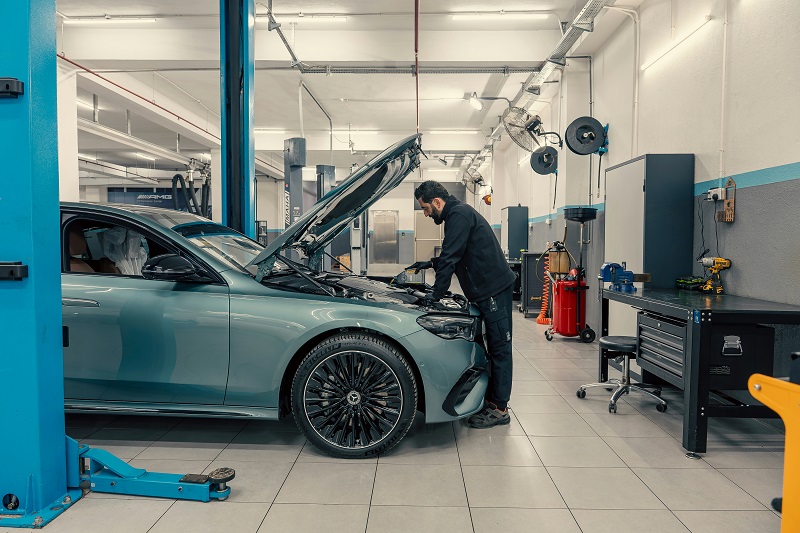
Thermal management and lubrication are the two most critical factors in preventing this snowball effect. Engines generate immense heat and friction. The fluids designed to manage these forces degrade over time due to oxidation and thermal breakdown. Once these fluids lose their protective properties, internal components begin to grind against each other, creating microscopic metal shavings that circulate through the system. This internal erosion is often irreversible. By the time a driver notices a strange noise or a dashboard warning light, the internal damage may already be extensive. Consistent inspections allow technicians to identify these small leaks or worn seals before they lead to a complete system collapse.
Improving Fuel Efficiency and Performance
The relationship between regular maintenance and fuel economy is direct and measurable. An engine that is not properly maintained must work harder to produce the same amount of power. This inefficiency translates directly to higher costs at the fuel pump. Dirty air filters, clogged fuel injectors, and old lubricants all contribute to internal resistance. When an engine struggles against this resistance, it consumes more fuel and emits more pollutants.
Optimizing performance is not just about speed; it is about the smooth operation of every system working in harmony. For instance, scheduling a regular oil change in Provo Utah helps maintain the internal cleanliness of your engine by removing the carbon deposits and sludge that naturally accumulate over time. Fresh lubricant ensures that the pistons move freely and that heat is effectively dissipated. Furthermore, properly inflated and aligned tires reduce rolling resistance, which further improves mileage. When a vehicle is running at its peak mechanical efficiency, the driver enjoys a more responsive experience and a significantly lower cost per mile driven.
Ensuring Safety on the Road
Beyond the financial implications, regular service is a fundamental component of road safety. A vehicle is only as safe as its most neglected system. Brakes are perhaps the most critical safety feature, yet many drivers wait until they hear a grinding sound before seeking professional help. By that point, the brake pads have likely worn down to the metal, potentially damaging the rotors and compromising the vehicle’s ability to stop in an emergency. Regular inspections allow for the monitoring of pad thickness and the integrity of brake lines, ensuring that stopping power is always available when needed.
Tires and visibility are equally important. Tires are the only point of contact between the vehicle and the road. Uneven wear or low tread depth can lead to hydroplaning in wet conditions or blowouts at high speeds. During a routine service, technicians check for structural integrity and ensure that the tread is sufficient for safe travel. Similarly, checking the condition of wiper blades and the alignment of headlights ensures that the driver can see and be seen. These small adjustments and replacements might seem trivial during a sunny day, but they are life-saving during a storm or on a dark highway.
Maintaining Resale Value
For many, a vehicle is a temporary asset that will eventually be sold or traded in for a newer model. When that time comes, the most significant factor influencing the valuation is the service history. A potential buyer or a dealership appraiser looks for proof that the vehicle has been cared for. A comprehensive log of every oil change, fluid flush, and belt replacement acts as a “health certificate” for the car.
Vehicles without a documented history are often viewed with suspicion. Without proof of maintenance, a buyer must assume that the vehicle has been neglected, leading to lower offers and a longer time on the market. Conversely, a well-documented service history justifies a higher asking price. It demonstrates that the owner was proactive and that the vehicle is less likely to suffer a major failure shortly after the sale. In this sense, the money spent on maintenance is partially recovered through the higher resale value achieved at the end of the vehicle’s life cycle.
Conclusion
The choice between proactive maintenance and reactive repair is ultimately a choice between control and chaos. Regular vehicle service provides peace of mind, knowing that the machine you rely on every day is in optimal condition. It transforms unpredictable, high-cost repairs into predictable, low-cost investments. By addressing minor issues before they escalate, improving fuel efficiency, ensuring the safety of all passengers, and protecting the long-term resale value, drivers can significantly reduce the total cost of ownership. Proactive care is not just a mechanical necessity; it is a smart financial strategy that pays dividends every time you turn the key.