

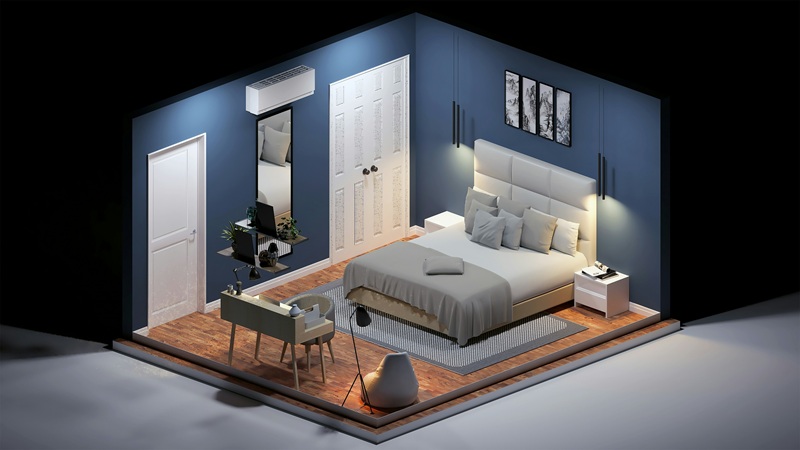
Bedroom upgrades promise transformed personal sanctuaries but often overwhelm homeowners with competing priorities, budget constraints and design uncertainties. Whether you’re refreshing tired décor or undertaking complete renovations, focusing on four fundamental elements, such as furniture selection, storage optimisation, lighting design and bedding quality, creates cohesive spaces balancing aesthetics with functionality whilst avoiding costly missteps.
Choose the right furniture
Furniture anchors bedroom design, establishing style whilst serving practical needs. Scale is important, and so oversized pieces overwhelm compact rooms, creating cramped atmospheres instead of restful retreats. Measuring spaces meticulously before purchasing prevents delivery day disappointments when beds won’t fit through doorways or wardrobes block radiators. Consider your lifestyle requirements: couples need sufficient storage for two people’s belongings, whilst those working from home might prioritise desk space. Style consistency is also relevant, and mixing modern minimalist pieces with ornate traditional furniture creates visual discord instead of curated eclecticism. Investment in quality construction guarantees longevity, with solid wood frames and dovetail joints outlasting flat-pack alternatives by decades. Neutral foundational pieces accommodate evolving tastes through changeable accessories instead of requiring complete replacements when trends shift.
Optimise storage solutions
Inadequate storage creates perpetual clutter, undermining even beautifully designed spaces. Built-in units maximise awkward alcoves and sloped ceilings common in British homes, converting wasted space into functional storage whilst maintaining clean lines. Under-bed drawers capture dead space beneath mattresses for seasonal clothing or spare bedding. According to House Beautiful’s bedroom storage ideas, vertical storage through floor-to-ceiling solutions capitalises on often-neglected height. For those with sufficient space, walk-in wardrobes transform storage from functional necessity into luxurious experience, providing organised visibility of entire wardrobes whilst eliminating morning scrambles through overstuffed drawers. Even modest rooms benefit from strategic storage planning, preventing surfaces from becoming dumping grounds for homeless items.
Focus on lighting
Lighting affects bedroom atmosphere and functionality, yet receives disproportionately little attention during upgrades. Layered lighting schemes combining ambient ceiling fixtures, task-orientated bedside lamps and accent spotlighting create versatility, supporting different activities and moods. Dimmer switches allow adjustment from bright morning preparations to subdued evening reading. Natural light maximisation through appropriate window treatments balances privacy with brightness; for instance, blackout blinds paired with sheer curtains offer flexibility. Warm-toned bulbs (2700-3000K) promote relaxation better than cool white alternatives that stimulate alertness. Positioning reading lights to eliminate shadows on book pages whilst avoiding glare requires thoughtful placement instead of afterthought installation.
Invest in quality bedding
Bedding quality directly impacts sleep quality, making this upgrade particularly worthwhile. Natural fibres like cotton, linen and bamboo offer superior breathability compared to polyester alternatives, regulating temperature throughout nights. Thread count matters less than fibre quality. For example, a 200-count Egyptian cotton outperforms 1000-count synthetic materials. Seasonal variations maintain comfort year-round, with lightweight percale weaves for summer and brushed flannel for winter. Quality bedding lasts substantially longer than cheap alternatives whilst feeling noticeably better against skin, justifying higher initial investment through extended replacement cycles.
Thoughtful bedroom upgrades balancing these four elements create spaces genuinely supporting rest, relaxation and personal style instead of just following fleeting design trends.