

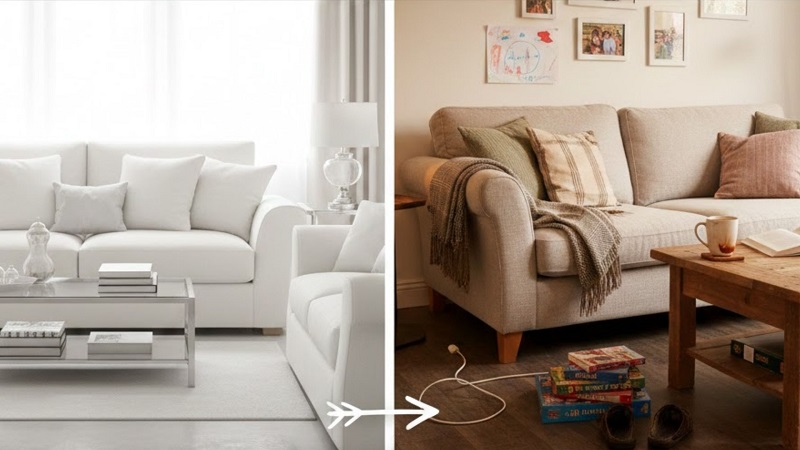
For years, the show home set the standard for “good” interior design. Everything was immaculate, cushions perfectly plumped, surfaces spotless and not a single charger cable in sight. Beautiful? Yes. Relatable? Not even slightly.
That glossy, untouchable look is starting to lose its grip. Homes are no longer being designed to impress strangers or mirror marketing brochures. Instead, interiors are shifting towards something more honest: spaces that embrace mess, movement, and the moods of everyday life.
This marks a clear move away from performance interiors and towards homes that prioritise comfort, practicality, and emotional connection.
What the ‘Show Home Era’ Actually Meant
Show home interiors were never meant to be lived in. They were designed to sell a dream: pristine rooms with no evidence of real people, routines, or wear.
These spaces typically featured minimal clutter and sparse storage, light-coloured floors chosen for visual impact, not durability, furniture arranged for symmetry rather than comfort, and décor that looked styled, not collected.
While aspirational, this approach created pressure. Homes began to feel like something to maintain rather than enjoy, with mess seen as failure rather than evidence of life.
Why People Are Letting Go of Perfect Homes
Several cultural shifts are driving this change. After years of social media perfection and curated interiors, there’s growing fatigue around spaces that feel staged.
People are craving homes that support daily routines, not disrupt them. They want interiors that adapt to changing moods and seasons, and materials that age naturally instead of needing constant upkeep
There’s also a deeper emotional element. A home that shows signs of use feels grounding. It reflects personality, memories, and real life unfolding, not just a frozen aesthetic.
Designing for Mess (Without Chaos)
Designing for mess doesn’t mean accepting disorder. It means creating spaces that can handle everyday life without feeling stressful or fragile.
Practical choices make a huge difference:
- Durable flooring, like luxury vinyl tiles, that copes with muddy boots, pet paws, and daily foot traffic
- Finishes that don’t show every scuff or fingerprint
- Storage that’s accessible, not hidden away for appearances
Wood-effect floors, textured finishes, and patterned designs are becoming popular foundations because they disguise wear and add visual interest over time. Floors are no longer expected to look untouched as they’re allowed to evolve.
Mood-Led Design Over Matching Sets
Another sign of the show home era fading is the move away from perfectly coordinated interiors. Instead of matching furniture ranges and uniform colour palettes, homes are becoming more layered and mood-led.
This looks like mixing old and new furniture, letting colour appear gradually rather than all at once, and choosing pieces for emotional value, not trends
Mood-led homes feel softer and more flexible. A room can feel calm one day and energetic the next, depending on lighting, textures, and how it’s used. The focus shifts from visual perfection to how a space makes people feel.
Flooring as the Quiet Hero of Real Homes
When homes are designed for real life, flooring becomes one of the most important decisions. It’s the surface that absorbs the most wear, yet it often gets overlooked in favour of wall colours or furniture.
Practical, mood-friendly flooring choices tend to:
- Feel warm and comfortable underfoot
- Reduce visual stress by hiding marks and texture variations
- Work across multiple rooms without constant upkeep
Engineered wood, LVT, and character-led finishes are increasingly favoured because they balance appearance with resilience. They support lived-in interiors rather than fighting against them, making them ideal for homes that value ease over perfection.
Is This Shift Right for Every Home?
Not every space needs to abandon structure entirely. Clean lines and calm palettes still have their place, especially in smaller homes or busy households. The key difference is intention.
Instead of asking, “Does this look impressive?” the question becomes:
- Does this work for daily life?
- Can this space cope with change, mess, and movement?
- Does it reflect the people living there?
Homes designed with these questions in mind tend to feel more relaxed, welcoming, and sustainable long term.
A More Honest Way of Living
The end of the show home era doesn’t mean homes should look unfinished or careless. It means letting go of unrealistic standards and embracing spaces that evolve naturally.
Mess becomes part of the story. Wear adds character. Mood takes priority over matching.
Designing for life, not display, creates homes that feel lived in, loved, and genuinely personal. And in a world that already demands enough perfection, that shift feels long overdue.